

Advent 8 – Kindness as Wellness
By Cathy Le Feuvre

As Christmas approaches, many of us may find ourselves rushing into shops, searching for that elusive gift, ensuring that we have all the right ‘stuff’ for our festive celebrations.
If we’re trying to create a ‘perfect’ Christmas, this season can be unnecessarily stressful and rather competitive, as shoppers grab what they want from the shelves, perhaps under the nose of someone else who also desperately wants that product.
Christmas is a time for giving and receiving – it’s synonymous with kindness! But sometimes, in all the rushing around, kindness itself may not get a look in.
I grew up in Africa where my parents were Salvation Army missionaries, running a rural agricultural project. Our family had little in the way of money, but we often benefited from the generosity of others. I also saw how Mum and Dad shared what little they had, including on Boxing Day when we hosted an annual picnic and barbecue on our remote farm, where many friends gathered, everyone bringing something to the table to share.
In The Gift of Kindness, Debbie Duncan and I discovered that kindness can be life transforming, whatever the season.
Kindness is a hot topic in psychology and medicine, and research is showing that it’s not just good for others, for our community … it’s good for us too!
Giving or receiving kindness can apparently make us feel more satisfied with life because of the release of serotonin - a neurotransmitter and hormone that affects among other things, mood - and the chemical dopamine, which can result in a feeling of euphoria.
As you are kind or people are kind to you, you produce endorphins which are the body’s natural painkillers, and just thinking about or witnessing acts of kindness apparently enhances our oxytocin levels. This chemical, sometimes known as the ‘love hormone’, increases self-esteem and optimism, and impacts behaviour like trust, empathy, and cooperation.
Kindness may reduce anxiety and depression, improve cardiac health and lower blood pressure by reducing the hormone cortisol. And kindness, we know, can help reduce loneliness, build relationships and strengthen communities.
Jesus knew how closely connected kindness is to human wellbeing.
He lived a life of kindness. He touched and healed people suffering from leprosy, an infectious disease which often left victims disfigured and banished from their homes and communities. He ate a meal with a taxman who everyone despised and that kindness led to Zacchaeus turning his life around, repaying what he owed, and with interest!
Jesus encouraged his followers to love and show kindness to everyone we meet, including the unloved and the disadvantaged, and to consider others’ needs as well as our own.
So, this Christmas, imagine how a little kindness might transform the season, for us and everyone around us.
It doesn’t have to be a grand gesture, like buying expensive presents or creating the perfect celebration. It might be a simple thing, like knocking on the door of a neighbour who appears rather crotchety – we may discover that they’re just very lonely.
Or, when we’re out shopping, taking a moment to open a door for a stranger laden with bags, or, perhaps, NOT grabbing that last item on the shelf, but allowing the other person to have it instead?
Heavenly Father,
As we prepare to celebrate your ultimate Gift of Kindness – the coming of Jesus to this world to bring us life, hope and peace – help us to be aware of the needs of others, to share what little we may have, and to live a life overflowing with kindness.
Amen
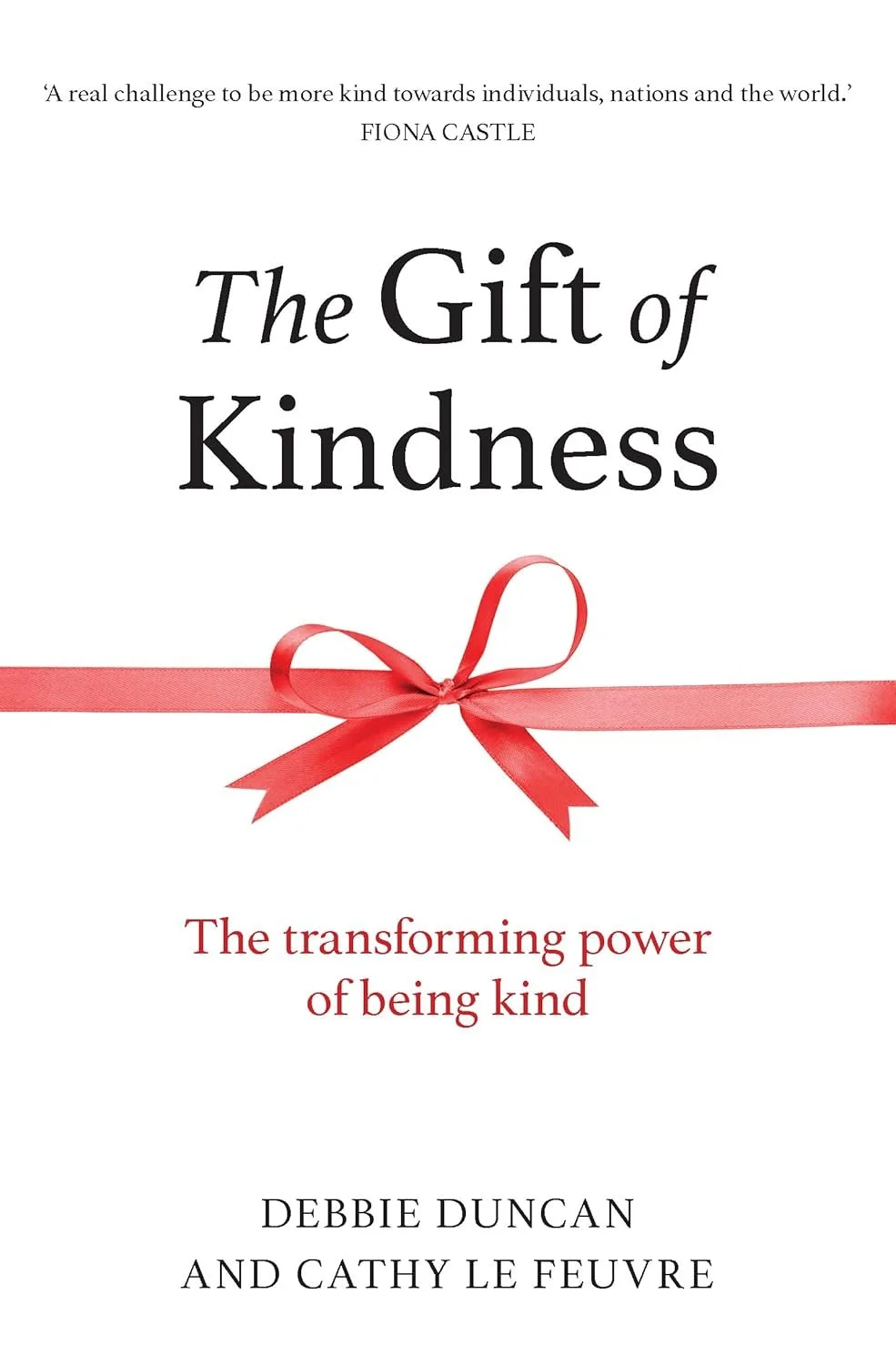
The Gift of Kindness
Cathy & Debbie’s book is available at all good bookshops or to buy online, use the button below